Read the Room: Four Crew Types, Four Approaches
You walk into a room with a brilliant argument. Half the faces are blank, two are scowling, and one person in the back is already nodding. Same words — four completely different receptions.
Part 1: Read the Room: Four Crew Types, Four Approaches — Concept
+5 XP on completion
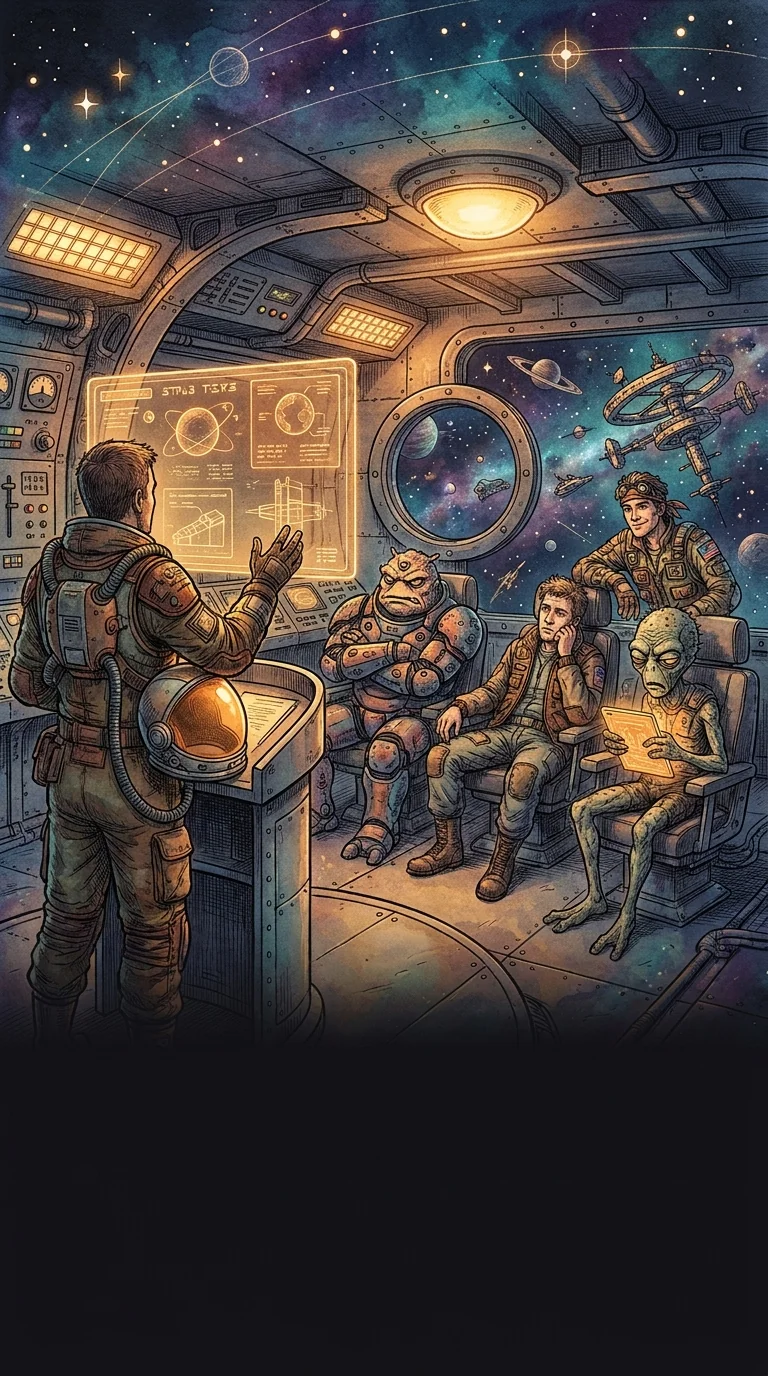
You walk into a room with a brilliant argument. Half the faces are blank, two are scowling, and one person in the back is already nodding. Same words — four completely different receptions.
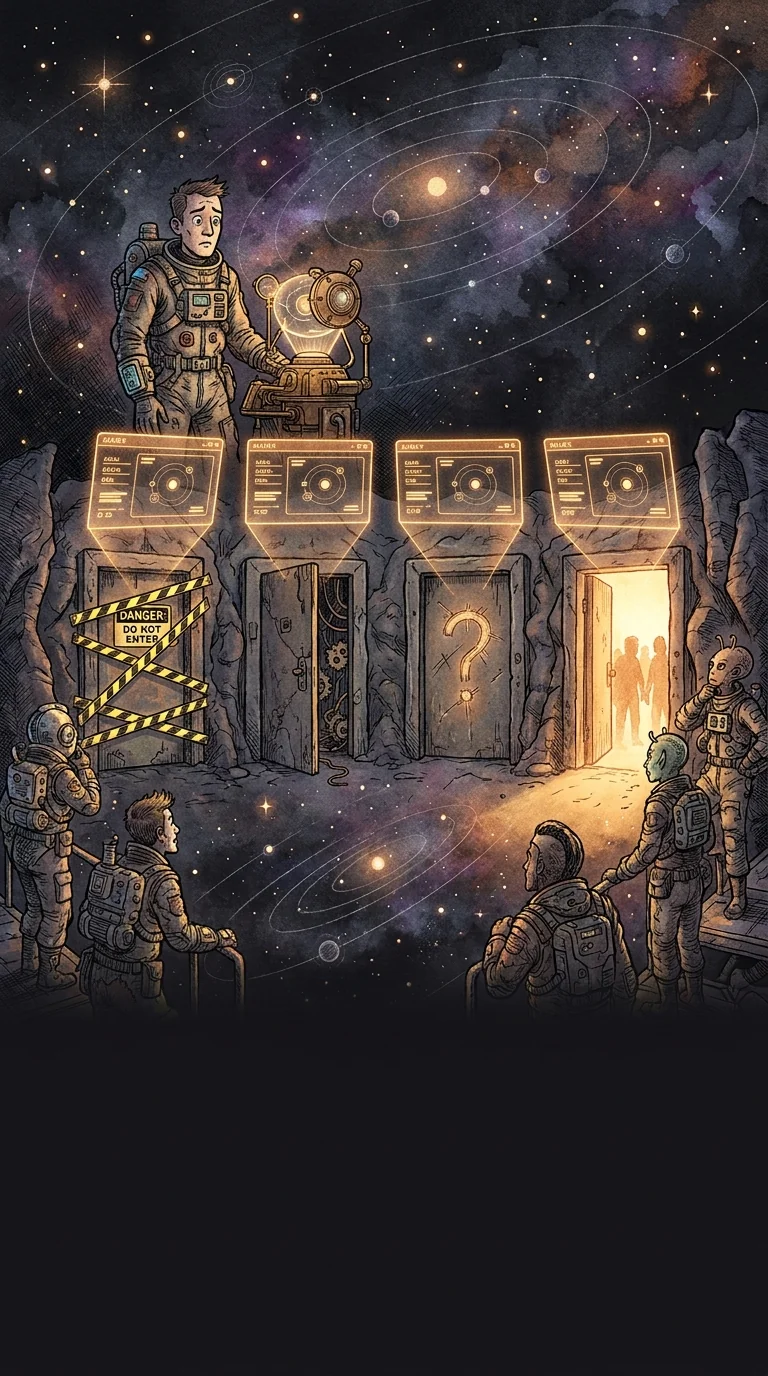
The classic mistake: treating every audience like it's the same audience. You rehearse one pitch, load one set of slides, and deliver it identically whether the room wants to fight you or hug you.
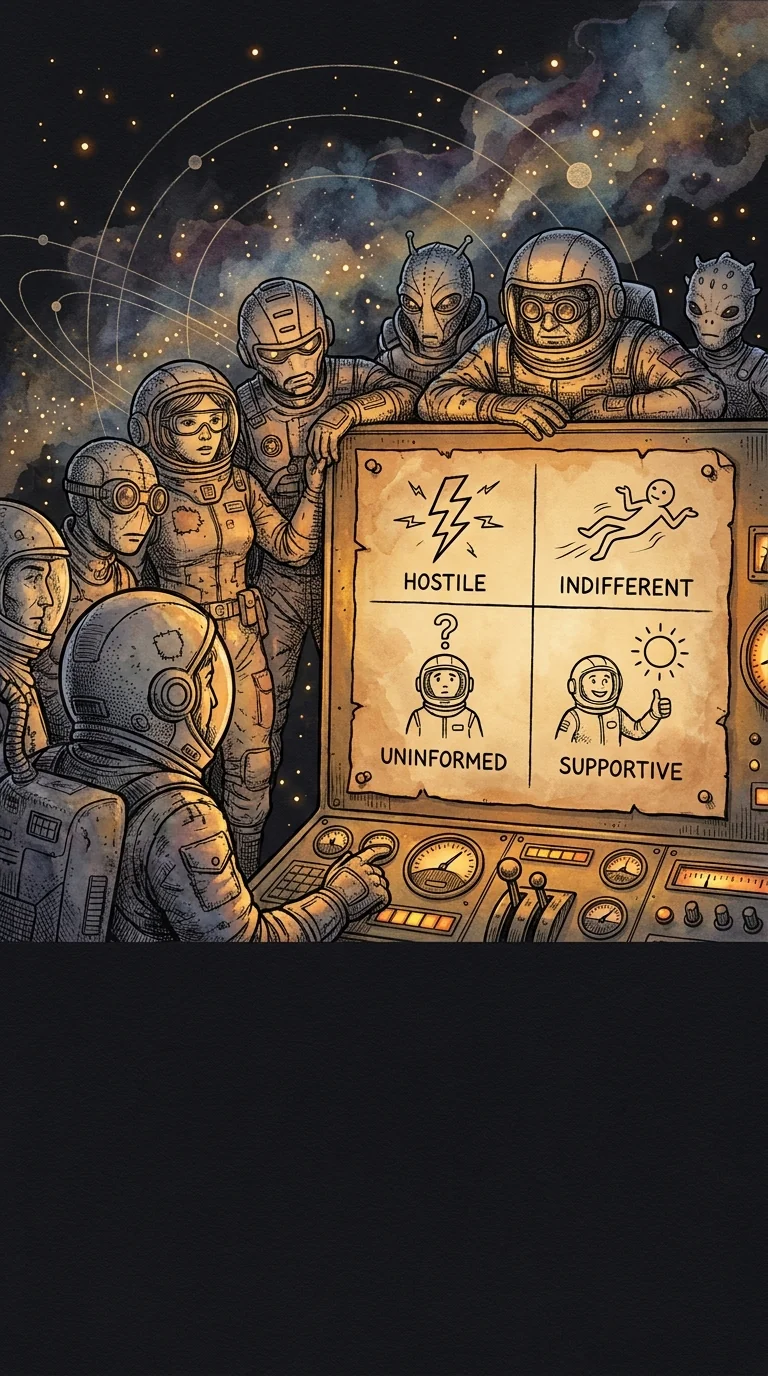
Every room breaks down into four crew types: hostile, indifferent, uninformed, and supportive. Name which one you're facing and your whole strategy sharpens — because each type needs a different opening move.

Hostile rooms need you to acknowledge the tension before you say anything else — skip that and they stop listening. Indifferent rooms need a reason to care in the first ten seconds. Uninformed rooms need context before content. Supportive rooms? Give them something to do with their enthusiasm, or it evaporates.
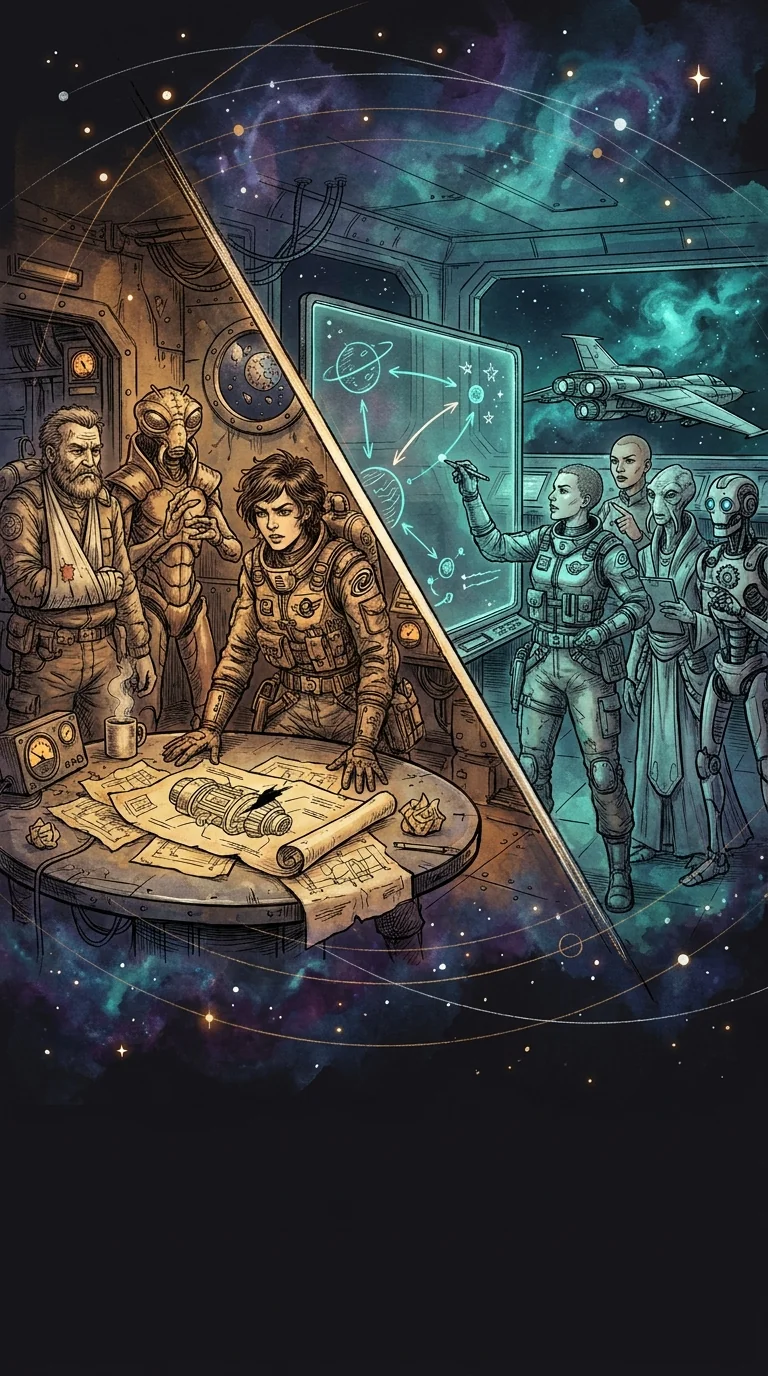
Lisa pitched the same supply-route proposal to two station councils in one week. The first council had been burned by a similar plan before — hostile. She opened by naming what went wrong last time, and they actually leaned in. The second council had never heard of supply-route optimization — uninformed. She started with a sixty-second primer and skipped the jargon. Same proposal, two different first moves.
Knowing your four crew types is the diagnostic. Knowing what to do with each one — that's the skill. In Part 2, you'll practice identifying which type you're facing and choosing your opening move for each. See you there.
Part 2: Read the Room: Four Crew Types, Four Approaches — Practice
+10 XP on completion
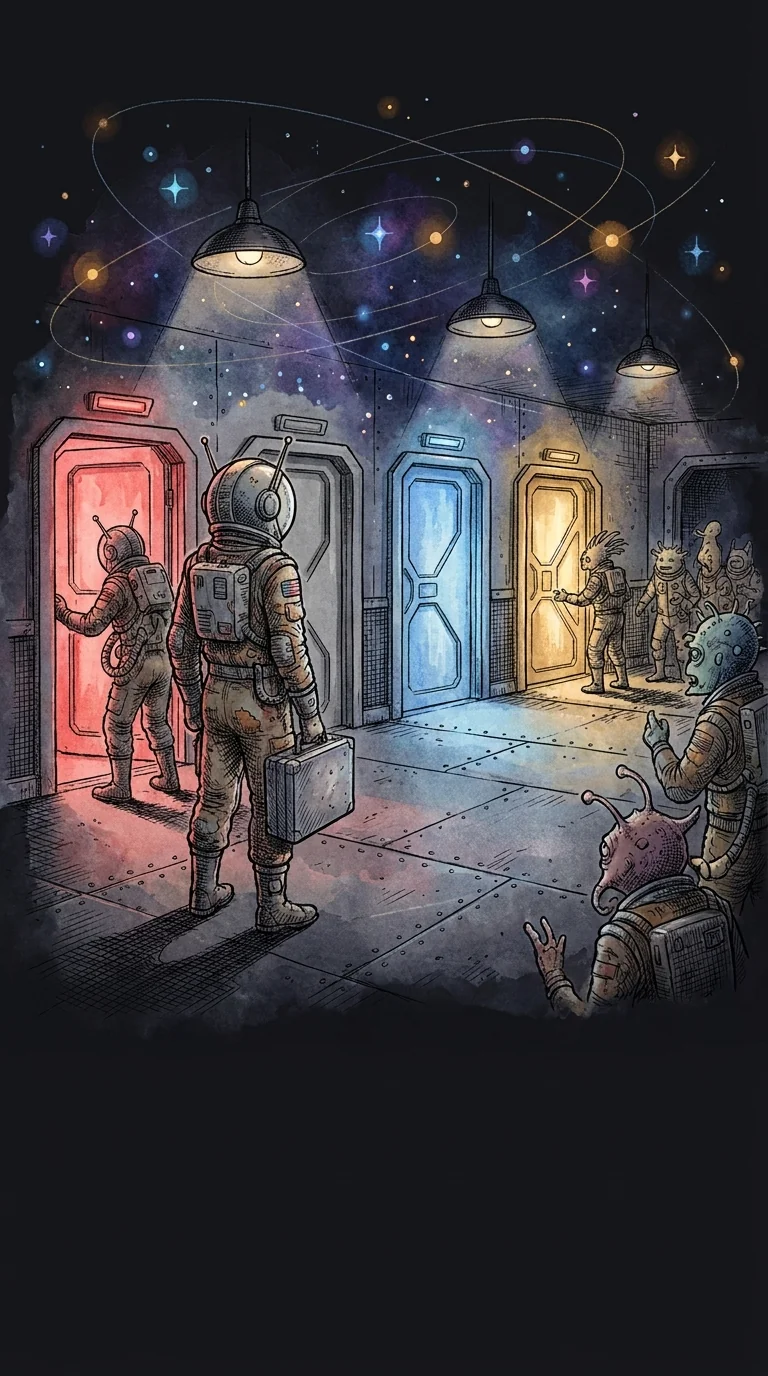
Different audiences need different fuel. The same pitch that wins over a supporter will crash and burn in front of a hostile crowd.

Most communicators have one gear. They deliver the same message to every room and then wonder why half their landings are rough.
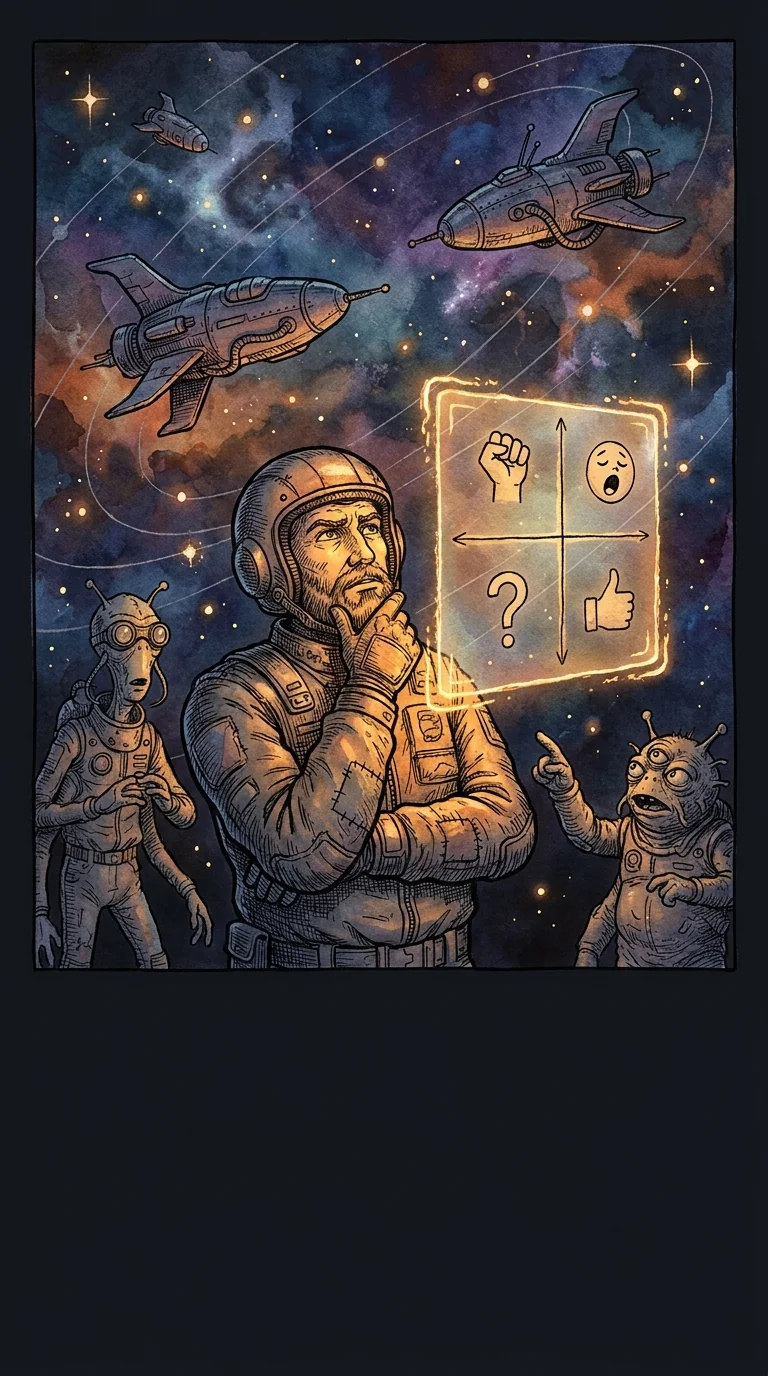
The technique is called the Crew Scan. Before you open your mouth, you spend sixty seconds diagnosing which of the four types you're facing — hostile, indifferent, uninformed, or supportive — and you shift your approach accordingly.
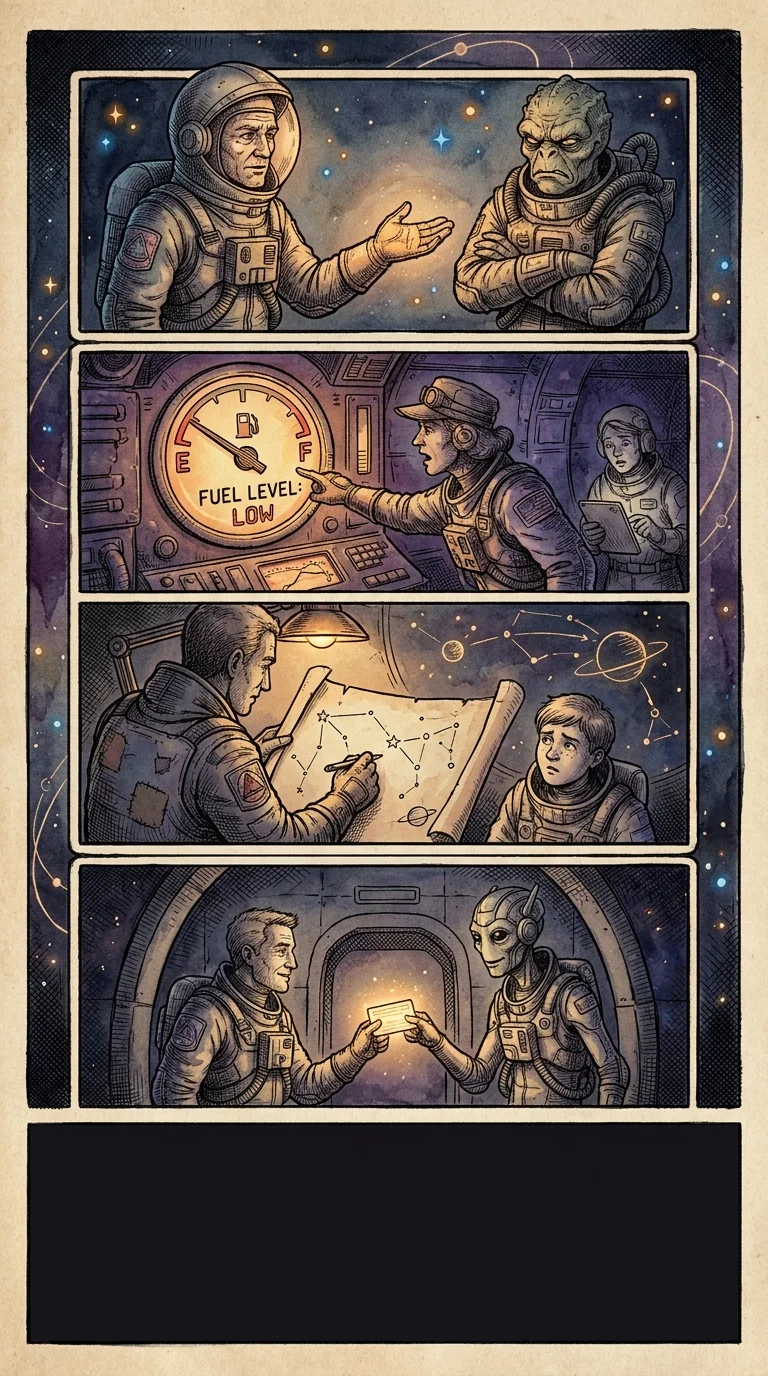
Hostile? Acknowledge their objection before you pitch. Indifferent? Lead with what's at stake for them. Uninformed? Start with context, not conclusions. Supportive? Give them language to champion you when you leave the room.
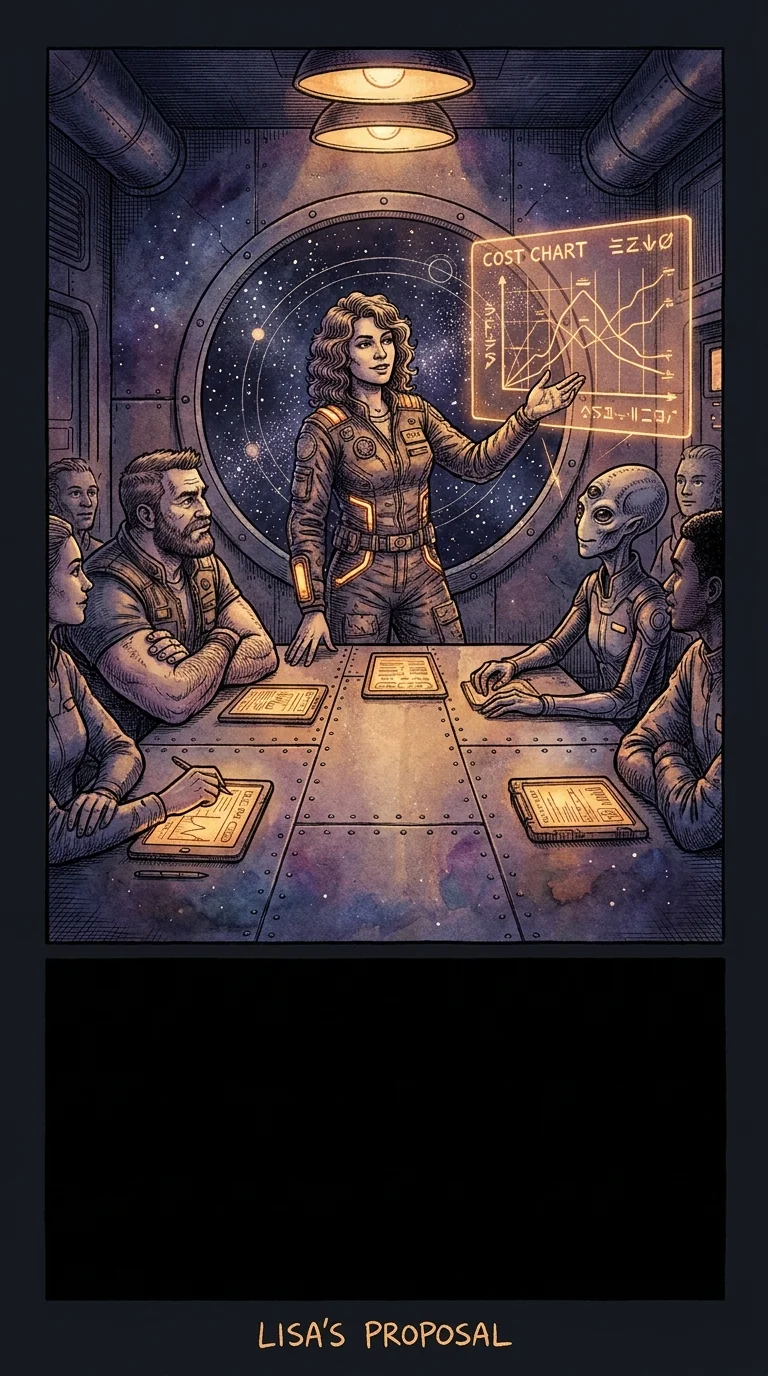
Lisa walked into the budget review expecting supporters. One glance told her otherwise — arms crossed, zero eye contact. She shelved her enthusiasm, opened with their biggest concern, and addressed it head-on. Ten minutes later, the room was leaning in instead of leaning away.

You don't need a different personality for every room. You need sixty seconds of observation and the willingness to adjust your opening line. That alone puts you ahead of nearly everyone who walks in on autopilot.