The Five Cs of Automatic Trust
Four percent. That's how many people walk into a room and get believed automatically — before they say anything smart, before they prove anything. The other ninety-six percent are still auditioning.
Part 1: The Five Cs of Automatic Trust — Concept
+5 XP on completion

Four percent. That's how many people walk into a room and get believed automatically — before they say anything smart, before they prove anything. The other ninety-six percent are still auditioning.

Most persuasion advice tells you to get sharper arguments, better data, slicker slides. Meanwhile, the person who actually gets believed just… walks in and people lean forward. Funny how nobody teaches that part.

Automatic trust isn't charisma. It's not magic. It's five specific signals your brain checks before it decides someone is safe to believe — the Five Cs: Competence, Character, Composure, Connection, and Consistency. Miss one and the whole stack wobbles.
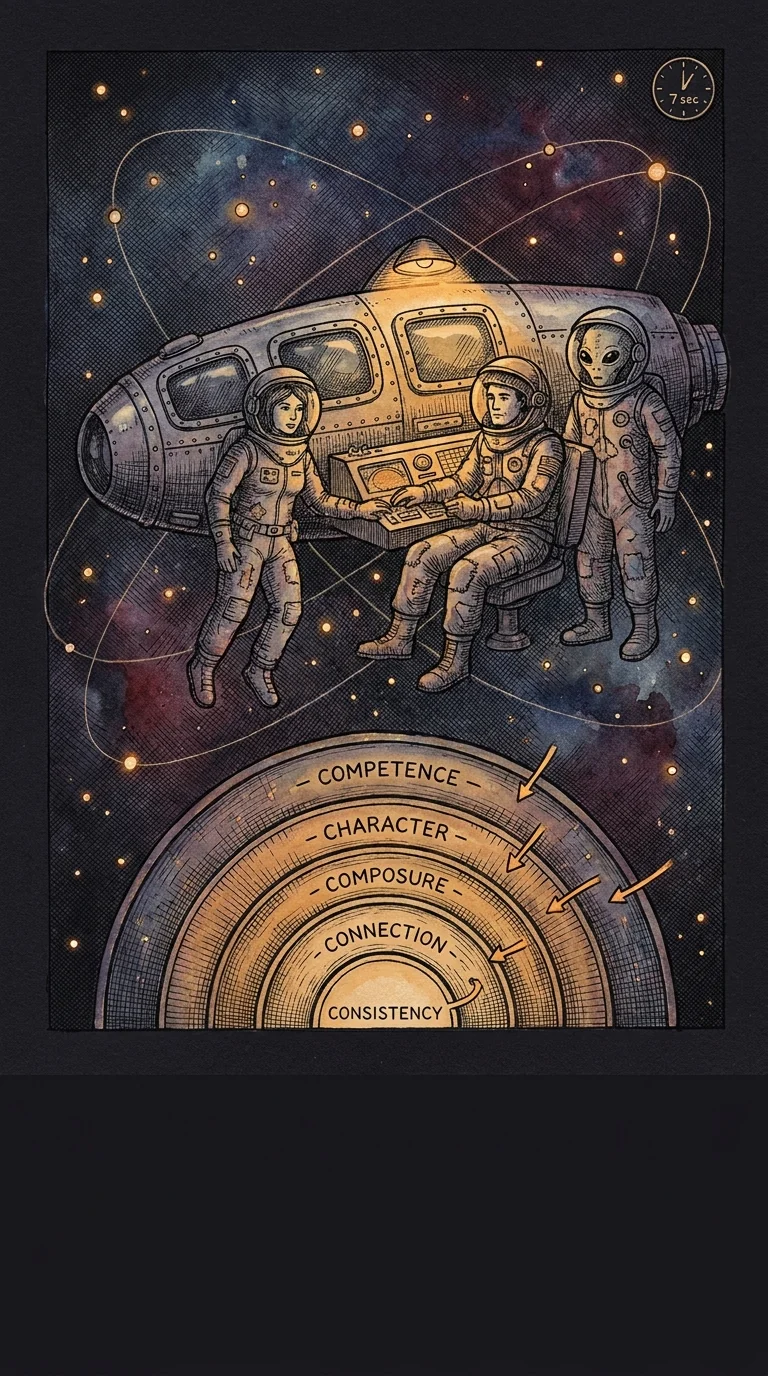
Here's how the stack works: Competence says you know your stuff. Character says you won't use it against them. Composure says you won't crack under pressure. Connection says you actually see them. And Consistency says you'll be the same person next Tuesday. Your brain runs all five checks in about seven seconds.

Marcus walked into the quarterly review with airtight numbers — Competence, locked. But he fidgeted, avoided eye contact, and contradicted something he'd said last month. Three Cs down. His boss approved someone else's weaker proposal twenty minutes later. The data was never the problem.

Knowing the Five Cs is step one. Noticing which ones you're leaking — that's where it gets useful. In Part 2, you'll practice diagnosing your own trust gaps and shoring up the C that's costing you the most. See you there.
Part 2: The Five Cs of Automatic Trust — Practice
+10 XP on completion

Only four percent of people walk into a room and get trusted automatically. The difference isn't charisma — it's a checklist most people never learn.

Most attempts at trust-building look like a sales pitch wearing a friendly hat. You layer on warmth, over-explain your credentials, and wonder why the other person's arms stay crossed.

The Five Cs give you a structure: Competence, Consistency, Caring, Candor, and Composure. Hit all five in the first ninety seconds and something clicks — the other person's guard drops before they decide to drop it.

Here's the drill. Before your next conversation that matters, pick one sentence for each C: something that shows you know your stuff, that you follow through, that you give a damn, that you'll say what's real, and that you won't rattle. Five sentences. Ninety seconds. That's the whole move.

Lisa had a funding pitch that kept dying in the first two minutes. She mapped her opening to the Five Cs — mentioned a relevant result (Competence), referenced a promise she'd kept to their team (Consistency), named a specific problem she wanted to solve for them (Caring), admitted the one thing her product couldn't do (Candor), and when they pushed back hard, she paused and answered without flinching (Composure). She got the meeting extended to an hour. Then she got the check.

You don't need to become someone new. You just need to show — in five specific ways — that you already are who they're hoping to meet. Practice the Five Cs once this week. You'll feel the difference before they even tell you.