Becoming the Operator People Want to Say Yes To
You've made the perfect pitch — airtight logic, compelling data, a closing line you rehearsed in the shower. And the room still said no. Ever wonder if the problem wasn't what you said but who was saying it?
Part 1: Becoming the Operator People Want to Say Yes To — Concept
+5 XP on completion

You've made the perfect pitch — airtight logic, compelling data, a closing line you rehearsed in the shower. And the room still said no. Ever wonder if the problem wasn't what you said but who was saying it?
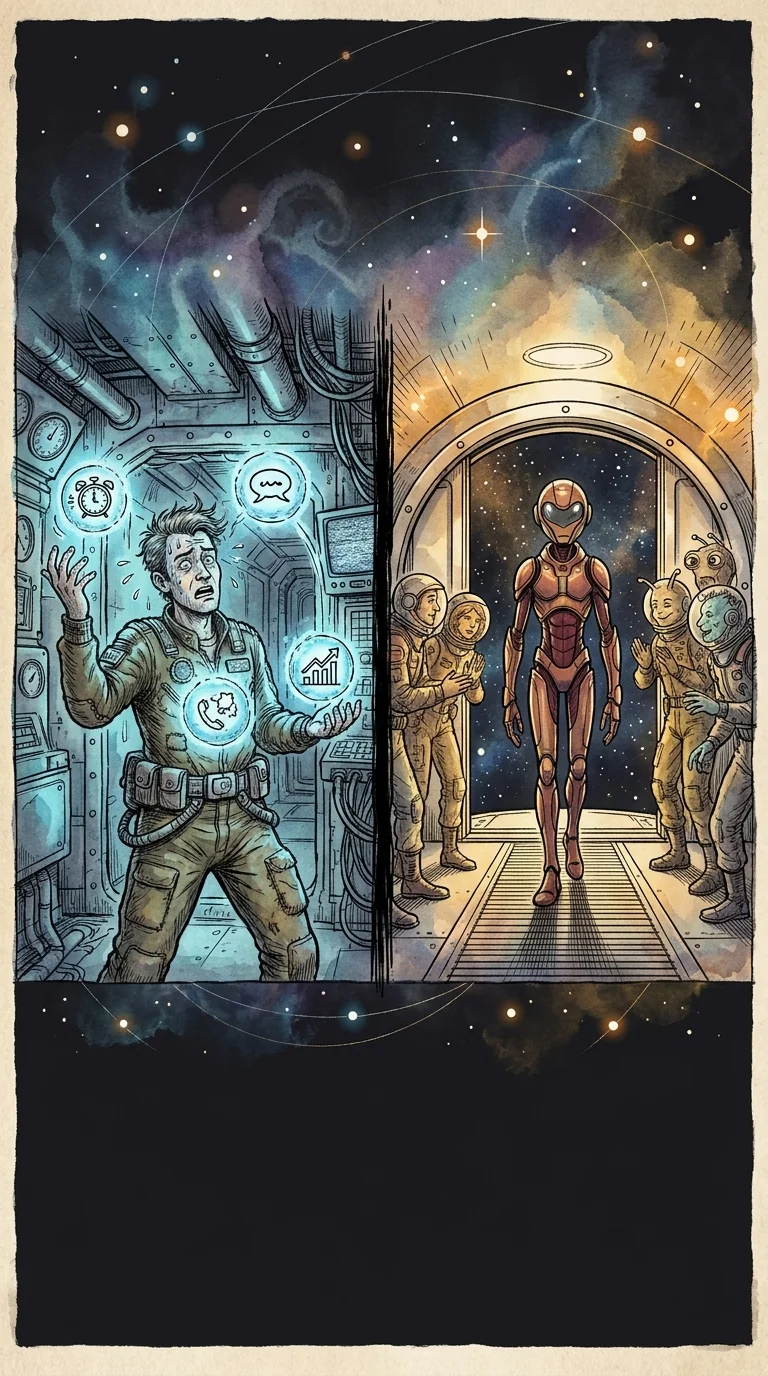
Persuasion is a thing you do — tactics, timing, the right words in the right order. Influence is a thing you are. One requires a performance every single time. The other walks into the room and the room rearranges itself.

Here's what nobody admits: the best argument in the galaxy loses to a mediocre argument delivered by someone the room already trusts. Influence isn't about being liked — it's about being believed before you open your mouth.

Influence compounds from three things: consistency (you do what you said you'd do), competence (you visibly know your craft), and candor (you tell the truth even when it costs you). Stack all three and people stop evaluating your arguments — they start assuming your arguments are good.

Marcus spent two years pitching the same colony-expansion plan, refining his slides each quarter. Lisa pitched a rougher version once — and got funded in a week. The difference wasn't the deck. Lisa had spent those two years delivering on smaller promises, publicly owning her mistakes, and building a reputation that did the persuading for her.

Persuasion is a single-use fuel cell. Influence is a reactor that keeps running. In Part 2, you'll practice mapping your own consistency-competence-candor profile and identifying the one gap that's costing you the most yeses. See you there.
Part 2: Becoming the Operator People Want to Say Yes To — Practice
+10 XP on completion
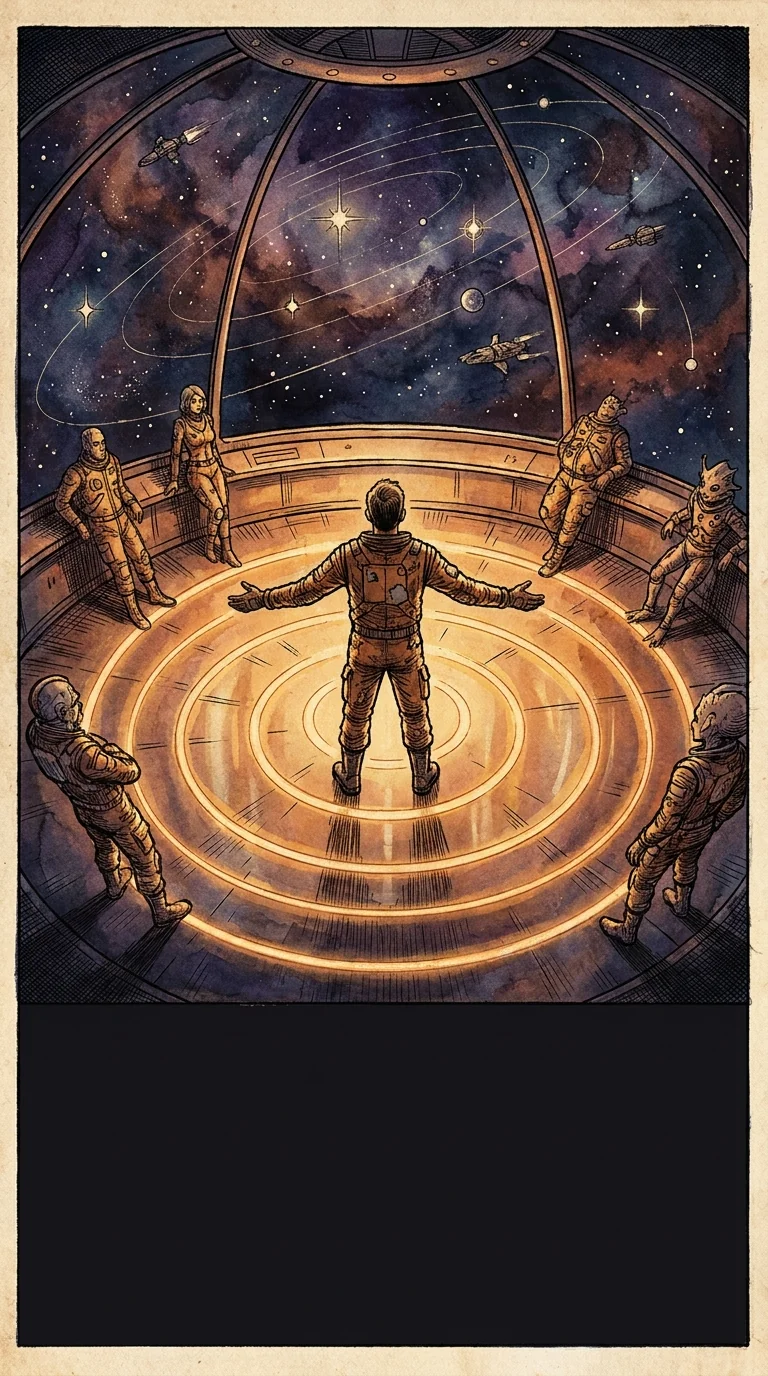
Persuasion is a thing you do in the moment. Influence is the gravity you generate before you even open your mouth — and today you're going to build some.

Most attempts at influence look like a sales pitch wearing a better outfit. You sharpen your arguments, rehearse your talking points, and wonder why people smile politely and then do exactly what they were going to do anyway.

Try this instead: the Gravity Audit. Three questions you answer about yourself before any ask, any pitch, any conversation where the outcome matters. Because influence isn't performed — it's prepared.

Question one: What have I already done that earns credibility here? Question two: What does this person need that I genuinely care about solving? Question three: Am I willing to hear no — and mean it? That last one's the kicker. People can smell a fake exit from three decks away.

Lisa needed her engineering lead to approve a schedule change that would cost his team two extra weeks. Before the meeting, she ran the Gravity Audit. She realized she'd already shipped three on-time projects with his crew — credibility banked. She genuinely wanted his input on the timeline, not just his signature. And she told him, plainly, that if it didn't work for his team she'd find another path. He said yes before she finished her second sentence.

Run the Gravity Audit before your next important conversation — all three questions, out loud or on paper. You're not rehearsing a pitch. You're becoming the kind of person the universe tends to agree with.