What Is Mind-Reading? (And Why Yours Is Probably Off-Calibration)
You already read minds — badly. Every time you guess what someone wants, predict how they'll react, or assume you know why they said that thing at dinner, you're running a persuasion algorithm that nobody ever taught you
Part 1: What Is Mind-Reading? (And Why Yours Is Probably Off-Calibration) — Concept
+5 XP on completion

You already read minds — badly. Every time you guess what someone wants, predict how they'll react, or assume you know why they said that thing at dinner, you're running a persuasion algorithm that nobody ever taught you to calibrate.

We walk around assuming persuasion is a personality trait — something you're born with, like green eyes or a talent for parallel parking. So when we fail to connect, we blame the audience instead of the instrument.

Spoiler: persuasion isn't charisma. It's pattern recognition — a skill you can measure, practice, and get measurably better at. That's what your Persuasion Quotient score actually tracks.

Here's how it works: every conversation is a signal-and-noise problem. You're transmitting what you mean; they're receiving what they expect. Your PQ measures how well you close that gap — by reading cues, adjusting your signal, and checking whether anything actually landed.
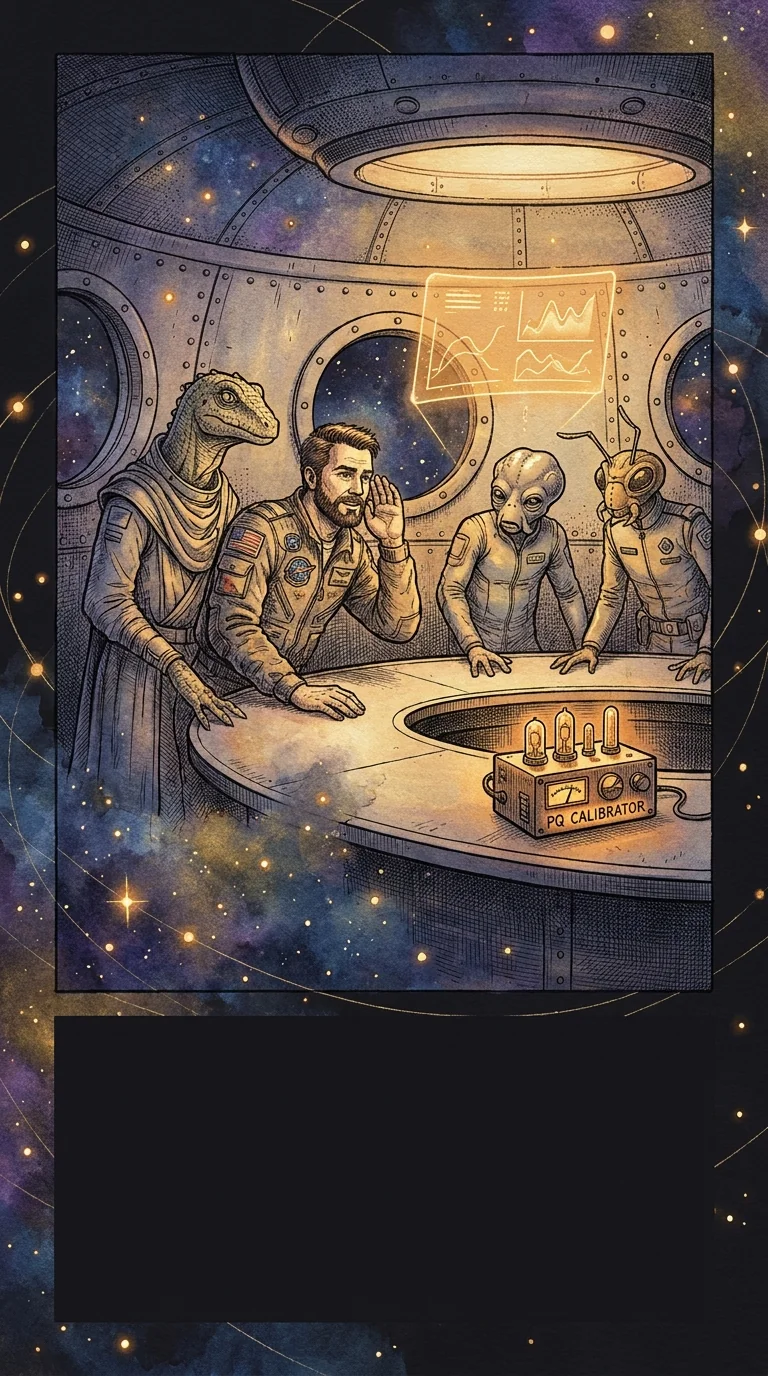
Marcus spent three months pitching his project to the same committee, using the same deck, wondering why they kept saying 'interesting' and doing nothing. Then he stopped presenting his reasons and started listening for theirs. Two weeks later, same room, same committee — approved. The data didn't change. His calibration did.

Your mind-reading hardware came pre-installed. Nobody handed you the manual. In Part 2, you'll take your first PQ baseline reading and see exactly where your calibration sits today. See you there.
Part 2: What Is Mind-Reading? (And Why Yours Is Probably Off-Calibration) — Practice
+10 XP on completion
So persuasion isn't a gift — it's a signal-reading skill, and skills have drills. Time to calibrate that scanner of yours.

Most attempts at reading people go like this: you guess what they're thinking, assume you nailed it, and barrel ahead. It's like calibrating an instrument by squinting at it and saying 'looks fine.'

The fix is stupidly simple: check your reads against reality. We call it the Three-Read Check — predict, observe, correct. That's the whole loop.

Here's how it works. Before your next conversation, write down one prediction: what does this person want from this exchange? Afterward, note what actually happened. Then score yourself — right, wrong, or partially off. Do it three times today.

Marcus tried this at a Monday meeting. He predicted his boss wanted a quick status update. What she actually wanted was reassurance about a deadline. He scored himself wrong — and that one honest miss taught him more than a year of assuming he had people figured out.

Three predictions. Three honest scores. That's all Day 1 asks of you. Your scanner's already getting sharper — and you haven't even noticed yet.